Right now life in Cairo has its ups and downs. Some mornings I wake up to the sunshine with a smile on my face: motivated to move about the city, conduct interviews with working children, or represent PPIC-Work at a CIDA 'Synergy' meeting. Other mornings I feel I'm walking in a heavy fog (both metaphorically and literally). It's not that anything is 'wrong' - it's just facing the reality of life here and feeling the challenges of inequality and violence in the world.
After attending a few conferences and presentations this month I'm feeling heavy or discouraged about the development industry: particularly about the amount of money spent on fancy brochures, paper pushing and publicity gigs which could do so much more good if channeled into project programming instead. Why are so many conferences and workshops conducted at lavish hotels? How can we justify spending so much money on things that begin and end in words alone?
Unfortunately, this is not my first exposure to the uppity side of development. While interning in Ghana I represented our tiny NGO at a three-day workshop at a National Park out in the northern Sahel. We had a wonderful time 'mainstreaming' gender in all aspects of a large International NGO's programming while on safari. (I'll never forget being chased to the lodge by a ferocious baboon, or watching elephants congregate around the nearby watering hole!) But on top of the sheer decadence (and dare I say hypocrisy) of it all, most of the NGO staff got wonderful per diems to compensate them from being away from their families. (What a tremendous sacrifice!) As I felt guilty about those unnecessary expenditures in Ghana, I felt similarly foolish tucking into a four course meal at a five-star Nile-side hotel last week.
This time the conference was to celebrate the achievements of an SME policy project within the Egyptian Government (which CIDA funded for the last seven years). Sitting in on panel discussions and plenaries for two days was not my idea of fun: most of the information was not relevant to our project, or, in my opinion, to the majority of the people attending. And perhaps the height of the conference's ridiculousness was the awards ceremony the first night. After presenting plaques to people who contributed to the project and left, to who those who stayed, those who provided technical support (etc ad nauseam); the final awards were for the three presenters themselves. While they took turns bestowing plaques and shaking each other's hands in formal spectacle I had to stifle a sad laugh... is this where our taxes are going?! No wonder we're being called to embrace RBM more and more!
I am grateful at least that the PPIC-Work project is not embracing that egotistical approach. I have been utterly impressed with Richard's integrity as a director and how we allocate our budgets. His Egypt flat doubles as our administrative office (and we frequently work from home), our workshops are designed to train new microfinance institutions in the intervention tools we've developed, and we try not to stay in the more plush hotels when traveling for the project. If only there were more people and organizations that embraced this conscientious approach!
--
On another level I have increasingly felt myself in a fog when it comes to the practical 'how to's of development in Egypt. I am feeling this for a couple reasons. First, I have recently encountered a lot of apathy... many people (particularly in the lower economic brackets) are only working for money, and therefore are not putting much soul into their work (stretching tea time for as long as possible, neglecting basic upkeep and organization, not worrying about who they exploit through their work or the working conditions of their employees, the list goes on). Perhaps this is because they are making too little money to care, because they do not feel that the work they are doing is meaningful, or because they see little room for change... I don't know.
Apathy also extends to the community level, with widespread acquiescence or complacency about the extremes of wealth and poverty and the plight of the economically marginalized. There is considerable wealth in Egypt but overall it feels like the economy is stagnating and the middle class disappearing in the wake of gated communities on the coast and crumbling apartments in bursting cities. I find my frequent movement between Cairo's glitzy hotels and informal settlements jarring... It's hard to return to my safe, warm house knowing that children are shivering in the streets, or struggling with an abusive parent.
I have even encountered apathy in Doweika. Here business owners in the textile industry were unwilling to meet with us if there was not immediate gain for them... perhaps because they are struggling to make ends meet they do not have the luxury to care about the long term well-being of their workers and how this will benefit their business. It's also hard to know how to intervene in the textile industry over all...Given the nature of our project (starting with the buy-in of business owners through loans) their lack of collaboration presents a formidable challenge. And then, because they are not fully embracing an apprenticeship model (particularly for their female employees) it becomes hard to work with them on educational methodologies because the changes required would be too great for them to want to do.
Finally I have observed apathy in the younger generations on both extremes of the economic spectrum. Those on the low end don't seem to have much hope for things changing for them... girls who were forced to drop out of school to work at a young age see only a life of work and marriage before them. Most don't want to work once they are married because tradition dictates that they not... resigning themselves to their husband's decision-making authority over them. At the same time, many growing up in more affluent communities are sheltered from the realities of struggling neighbourhoods, and therefore feel little empathy. Encountering a private school girl on the metro the other day I heard only about her eagerness to leave her 'boring' world of Cairo coffee shops and boyfriends for a university in Australia...
In a nutshell, these various manifestations of apathy make development work here heavy.
Second, is the complex development context here... We have a small tree on our patio, planted in a garbage can. It often falls over in gusts of wind. I feel this tree is a metaphor for Egypt: trying to develop fruits (a vibrant civil society and economy), but struggling from the confinement and lack of nourishment in its roots (an atrocious public education system [which anyone who can afford NOT to use, does - perpetuating a society that is highly stratified along economic/education lines], a struggling economy, an undemocratic and enormously clumsy government, and of course attitudes like apathy and greed). Given these challenges how can we effectively change things here? It seems we cannot address educational or economic reform without addressing good governance, but doesn't good governance require an active civil society - created through education? Even in our small project we feel this vicious cycle.
Yet amidst these challenges I have to mention the dedication of many Egyptians to the development of their country. It is always dangerous to speak in generalizations as my cynicism has led me to do tonight, and I have to concede I've been truly inspired by the efforts of many peers and mentors over the past four months. In moments of ambivalence I recall the words of friends, reminding me that all we can do is scatter seeds and hope they will be nurtured in fertile soil... that we can't change everything overnight and that the people of Egypt are as human as they come - full of determination, despair, love and fear - showing us how to struggle for transcendence, living life in all its intensity.
So that's where I'm at right now... critical but I hope not jaded... still committed to learning through work and smiling at the sun.
Monday, January 21, 2008

Monday, January 7, 2008
Party in Paradise: new years adventures in Siwa Pt3
And now for the party!
Until now my descriptions haven't reflected much of the title... only the fact that these adventures have been in Siwa. One of the highlights of the whole trip was New Year's Eve itself, when I got a chance to celebrate with Bedouin and foreign party-goers at a hot spring near town.
I happened upon this party by accident, really. I had become friends with Fahmy, the beautiful soul below, and chef/restaurant owner at the budget hotel where I stayed. I asked him for recommendations from the few bashes scattered around town and where he was planning to bring in the new year himself. He offered to take me to the gathering at Cleopatra's Bath, and I thought "Why not? It sure beats bringing in the new year alone!" So off we went on our bikes on a beautiful, (freezing!) headlamp-lit night. (For all the parents in the crowd I'll emphasize that I already knew Fahmy to be a trustworthy man from numerous conversations we'd had, and his interactions with other guests. I mean, look at him - doesn't his smile just scream integrity?)

(the man himself)

Right, so, biking... Twenty minutes later we arrived at a gorgeous hot spring and lodge, illuminated by candles and firelight. Being a palm tree paradise, it was only fitting that music was playing from "the beach" soundtrack, an all-you-can-eat buffet would be served shortly, and hours of Bedouin singing and dancing were before us. In short it was beyond ridiculously perfect - better than anything I could have schemed. At midnight boys tried to light firework-confetti, but they stuck the wrong end in the sand (even after fifteen minutes of instruction), and so the tinsel ended up in their laps instead of in the air to my utter delight. It was an excellent way to bring in the new year - doubled over with laughter.
Throughout the evening I had meaningful conversations with Fahmy and some of the foreigners around us. Fahmy helped me to take stock of my life and see how rich and simple it is... it was truly a gift to learn with him.
At the party I also met a kind Spanish couple from the Canary Islands. They offered to share their car with me on their journey back to Cairo the following day so I didn't have to spend another full day on a bus. En route we saw a herd of camels (not wild though I wouldn't try befriending them) and stopped in Marsa Matroah to see the sun go down. It was a pleasant end to an incredible trip - Hopefully the first of many forays to the oasis!!
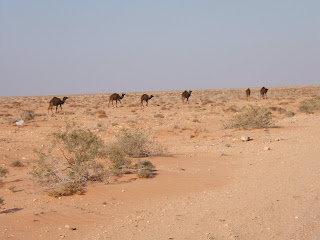
camels: wandering caravan style...


and a glorious sunset!!
Until now my descriptions haven't reflected much of the title... only the fact that these adventures have been in Siwa. One of the highlights of the whole trip was New Year's Eve itself, when I got a chance to celebrate with Bedouin and foreign party-goers at a hot spring near town.
I happened upon this party by accident, really. I had become friends with Fahmy, the beautiful soul below, and chef/restaurant owner at the budget hotel where I stayed. I asked him for recommendations from the few bashes scattered around town and where he was planning to bring in the new year himself. He offered to take me to the gathering at Cleopatra's Bath, and I thought "Why not? It sure beats bringing in the new year alone!" So off we went on our bikes on a beautiful, (freezing!) headlamp-lit night. (For all the parents in the crowd I'll emphasize that I already knew Fahmy to be a trustworthy man from numerous conversations we'd had, and his interactions with other guests. I mean, look at him - doesn't his smile just scream integrity?)

(the man himself)

(Fahmy's restaurant... loved by humans and cats alike!
Watch out: he makes a mean chocolate pancake with banana and honey!)
Watch out: he makes a mean chocolate pancake with banana and honey!)
Right, so, biking... Twenty minutes later we arrived at a gorgeous hot spring and lodge, illuminated by candles and firelight. Being a palm tree paradise, it was only fitting that music was playing from "the beach" soundtrack, an all-you-can-eat buffet would be served shortly, and hours of Bedouin singing and dancing were before us. In short it was beyond ridiculously perfect - better than anything I could have schemed. At midnight boys tried to light firework-confetti, but they stuck the wrong end in the sand (even after fifteen minutes of instruction), and so the tinsel ended up in their laps instead of in the air to my utter delight. It was an excellent way to bring in the new year - doubled over with laughter.
Throughout the evening I had meaningful conversations with Fahmy and some of the foreigners around us. Fahmy helped me to take stock of my life and see how rich and simple it is... it was truly a gift to learn with him.
At the party I also met a kind Spanish couple from the Canary Islands. They offered to share their car with me on their journey back to Cairo the following day so I didn't have to spend another full day on a bus. En route we saw a herd of camels (not wild though I wouldn't try befriending them) and stopped in Marsa Matroah to see the sun go down. It was a pleasant end to an incredible trip - Hopefully the first of many forays to the oasis!!

camels: wandering caravan style...

drive-by shooting: I rather like the funny angle

the beautiful beaches at Marsa Matroah
(sure to be packed in a few months)
(sure to be packed in a few months)

and a glorious sunset!!
Friday, January 4, 2008
Party in Paradise: new years adventures in Siwa Pt2
After a fun first day in the desert I decided to tone things down for a couple days, work on a paper and wander the town a bit. As I mentioned in my initial (slightly romanticized) description of Siwa, there were beautiful fortress ruins in the heart of town, just begging to be explored...

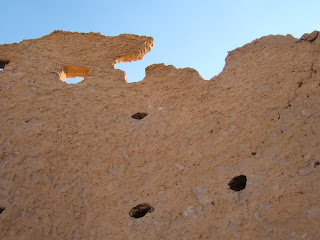
it was a little eerie exploring alone... I didn't run into anyone the whole time I was there


I could even see the ancient tombs off in the distance

and I did catch this gorgeous cat napping... what a beaut, eh?
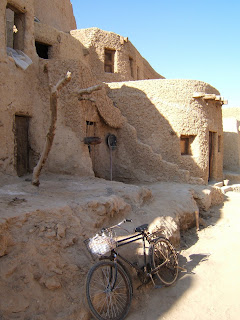
After exploring the fortress of Shali, I continued my wandering around town...

Here's a glimpse of the oasis in the distance... it's a lake really, it's huge!
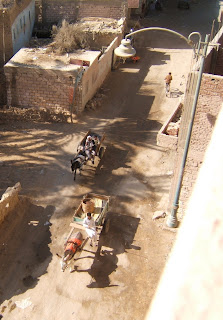
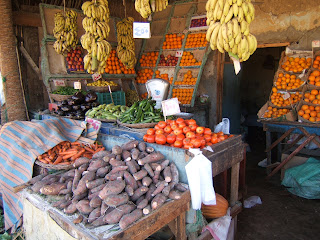
the market stalls with their fresh local organics...

and the children at play

these ruins were up on one of the natural cliffs, providing an exceptional view of the palm groves, rocky hills, and oasis town

it was a little eerie exploring alone... I didn't run into anyone the whole time I was there

but the sights were incredible...

I could even see the ancient tombs off in the distance

and I did catch this gorgeous cat napping... what a beaut, eh?

After exploring the fortress of Shali, I continued my wandering around town...

Here's a glimpse of the oasis in the distance... it's a lake really, it's huge!

and of course I had to capture the common transport...

the market stalls with their fresh local organics...

and the children at play
Party in Paradise: new years adventures in Siwa Pt1
After a long day on the bus, I arrived in Siwa. Siwa: the remotest outpost on the north side of the Sahara, a stone's throw east of the Libyan border. Siwa: an oasis sanctuary where you can forget the chaos and cares of Cairo by feasting on sweet dates and basking in natural hotsprings. Siwa: a magical community with fortress ruins and oracle temples. Siwa: a name that evokes relaxation and excitement with every syllable... Siwa!

The moment I arrived I knew I had found a treasured paradise. All around me were donkey carts trotting down the dusty roads, men chatting around the main market square, and date groves interspersed with pockets of houses. After checking into a nice budget hotel I began scheming about the best ways to spend my days. Talking with other foreigners, I decided to do at least one typical tourist thing - go on a one-day 'safari' into the desert... Translation: do some dune-riding in an off-roader, meandering out to a gorgeous hot-spring and then catching sunset in the desert. I know this is not normally my style, but what we saw and where we went were only accessible by jeep, and it really was worth every penny! Here are some of the best shots from that day:

Our group at the hotel - one Aussie, four Germans, one Dutchman, one Brit (MIA), one Egyptian, and me. Nine of us crammed into one car like sardines...

but we made some of the guys ride on top so it'd be more comfortable... just joking, they wanted the wild ride so they climbed on top for a while...

the desert was absolutely breath-taking...

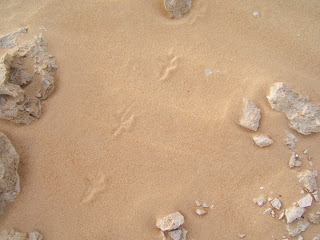
We didn't see any animals, in this barren land, but I have proof of their existence!

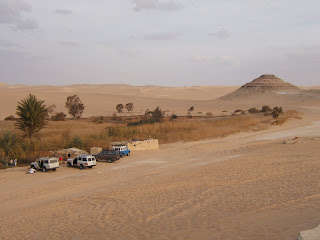
This is Bir Waheed Oasis... 30 km away from Siwa, and the site of a lovely hotspring!


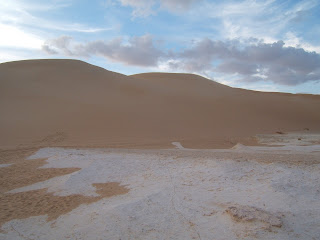
At one part we saw an ancient ocean floor, ground down into stone as the ages passed...


We ended the day with some tea and sandboarding while the sun went down... it was too cloudy for a spectacular sunset, but that didn't matter in the grand scheme of things, it was an amazing day!

The moment I arrived I knew I had found a treasured paradise. All around me were donkey carts trotting down the dusty roads, men chatting around the main market square, and date groves interspersed with pockets of houses. After checking into a nice budget hotel I began scheming about the best ways to spend my days. Talking with other foreigners, I decided to do at least one typical tourist thing - go on a one-day 'safari' into the desert... Translation: do some dune-riding in an off-roader, meandering out to a gorgeous hot-spring and then catching sunset in the desert. I know this is not normally my style, but what we saw and where we went were only accessible by jeep, and it really was worth every penny! Here are some of the best shots from that day:


but we made some of the guys ride on top so it'd be more comfortable... just joking, they wanted the wild ride so they climbed on top for a while...

the desert was absolutely breath-taking...

the camera couldn't do it justice at all!

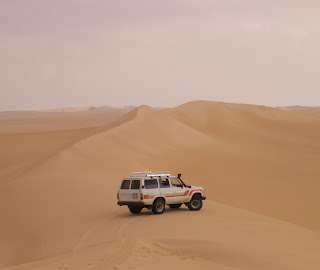
One of the highlights (apart from the beauty all around us!) was the thrill of driving straight down 60 degree slopes... better than any amusement park, and totally safe with our experienced driver.

Here's a cold spring oasis we visited. It was too cold to swim there this time of year but it was a serene place to wander around.

One of the highlights (apart from the beauty all around us!) was the thrill of driving straight down 60 degree slopes... better than any amusement park, and totally safe with our experienced driver.

We didn't see any animals, in this barren land, but I have proof of their existence!

It was so nice to feel the soft sand between your toes!

This is Bir Waheed Oasis... 30 km away from Siwa, and the site of a lovely hotspring!

of course we had to stay for about an hour, drinking tea and soaking, it was bliss!

it was nice to be out during 'golden hour'... the shadows and contours that came alive were incredible!

"the Aussie made me do it"... ok he inspired me... he was getting me to take pictures of him doing all kinds of action poses and it looked like fun, so i had to give it a try... what a great day to be alive!

At one part we saw an ancient ocean floor, ground down into stone as the ages passed...

we could still see some remnants from the ocean... here's a sand dollar! It was astounding to find this hundreds of kilometres from the Mediterranean!

We ended the day with some tea and sandboarding while the sun went down... it was too cloudy for a spectacular sunset, but that didn't matter in the grand scheme of things, it was an amazing day!
Wednesday, December 26, 2007
Christmas in Cairo
After sending out that moony mass mail to you all I think I have to compensate by telling you how much I enjoyed December 24th & 5th.
First, I went to a Christmas eve service at a downtown United church. It was a traditional lessons and carols type of deal, with glowing candles at the end, and all in English! It was extremely satisfying to sing all the traditional hymns that I love so much, alongside many MCC friends. After socializing and snacking for a bit, I rushed home to my flat-mate Rada (also an intern from Canada), so we could go out for a special dinner together. Nothing is more Christmasy than sushi, right? So we went to a fancy hotel a few blocks from us and had a sumptuous (and ridiculously expensive) meal. It was easily the most expensive sushi of my life particularly after living in Vancouver for a year, but it was worth the $30 for two rolls and miso soup, just this once!
Then, we cabbed to the Basilica in our neighbourhood for a midnight mass. Where the earlier service was mainly attended by foreigners, this one was packed with Egpytians an hour before things began, so we had to stand at the side while listening to the beautiful choral prelude. I was pleasantly surprised to find this mass in French, so I was able to understand most of what was going on. After about an hour of standing, Rada and I decided we'd had enough, but we left with merry hearts, touched by sacred music.
Christmas day, Rada awoke to a stocking in front of her door with some small presents from me. I had to take off to work for a few hours, but in the afternoon, I ended up at a Christmas party at the MCC country directors' house along with twenty or so MCCers and families. We had a wonderful feast (including my favourite mashed potatoes), sang carols in four-part harmony, and then did a gift exchange. It was a lovely night.
Of course I also called home via skype about three times during the day, recounting my Christmas blessings and hearing about our family's celebrations around the fire. It was a wonderful connection despite our distance from each other... and I'm grateful that the technology conspired in our favour.
Really, my life is very richly blessed... I am surrounded by a wonderful community of friends here, am enjoying meaningful work and good health, and I feel the support of many friends and family from afar! El Hamd'allah!!
First, I went to a Christmas eve service at a downtown United church. It was a traditional lessons and carols type of deal, with glowing candles at the end, and all in English! It was extremely satisfying to sing all the traditional hymns that I love so much, alongside many MCC friends. After socializing and snacking for a bit, I rushed home to my flat-mate Rada (also an intern from Canada), so we could go out for a special dinner together. Nothing is more Christmasy than sushi, right? So we went to a fancy hotel a few blocks from us and had a sumptuous (and ridiculously expensive) meal. It was easily the most expensive sushi of my life particularly after living in Vancouver for a year, but it was worth the $30 for two rolls and miso soup, just this once!
Then, we cabbed to the Basilica in our neighbourhood for a midnight mass. Where the earlier service was mainly attended by foreigners, this one was packed with Egpytians an hour before things began, so we had to stand at the side while listening to the beautiful choral prelude. I was pleasantly surprised to find this mass in French, so I was able to understand most of what was going on. After about an hour of standing, Rada and I decided we'd had enough, but we left with merry hearts, touched by sacred music.
Christmas day, Rada awoke to a stocking in front of her door with some small presents from me. I had to take off to work for a few hours, but in the afternoon, I ended up at a Christmas party at the MCC country directors' house along with twenty or so MCCers and families. We had a wonderful feast (including my favourite mashed potatoes), sang carols in four-part harmony, and then did a gift exchange. It was a lovely night.
Of course I also called home via skype about three times during the day, recounting my Christmas blessings and hearing about our family's celebrations around the fire. It was a wonderful connection despite our distance from each other... and I'm grateful that the technology conspired in our favour.
Really, my life is very richly blessed... I am surrounded by a wonderful community of friends here, am enjoying meaningful work and good health, and I feel the support of many friends and family from afar! El Hamd'allah!!
Saturday, December 22, 2007
feasting in el Obour
The countdown was on... streets were packed with (literally) millions of last-minute shoppers and travelers. It was absolute mayhem! Suddenly, as quickly as the roads had filled, they became deserted. Cairo had been evacuated for the countryside... people had places to go, butchering to do, extended families to see.
It was the Muslim Feast of Sacrifice: commemorating Abraham's willingness to offer his only son in obedience with God's command. I like to call it the feast of meat; families often slaughter a sheep, goat, or cow in remembrance of Abraham's faithfulness - sharing about one third of the animal with the poor in their community - perhaps even a leg (with skin still attached) if they're lucky.
The Eid is a time of gift giving: girls run around in cute new shoes, (to my chagrin) boys play with new plastic guns, and everyone shares way too many sweets! In a way it's like the Muslim equivalent to Christmas, with a week off work and socializing with family and friends. Add in the timing this year (late December), plus the exodus of ex-pat friends to their winter wonderlands and you had one slightly homesick Canadian.
 So, to remedy this, my friend Heba (right) invited me to join her for the festivities, see her family's village, and marry me off to one of her cousins.
First, we spent the night in her second home in el Obour, where we met her mother's family, and, naturally, stuffed ourselves with sweets. After sleeping through the special dawn prayer and slaughter of the family's calf (shucks) we had a special meal of rice and fried pita in a salsa and meat sauce. I ate a few morsels of meat after being pressured by Heba's mom but felt sick to my stomach (perhaps because we had walked by the butcher at work on the carcass an hour earlier, and well, I'm vegetarian). When it came time for seconds I had to refuse, but this sparked a lively discussion that shaped my relationship with Heba's mother for the remainder of our time together. Apparently my reasons for choosing vegetarianism (which I will likely share in a subsequent entry) were nothing to her as "meat is a gift from Allah". Alas, our different sources of authority and ideas about moral pluralism (or openness to pluralism) made for a little awkwardness, but I think we still ended on a positive note.
In the afternoon Heba and I set out for her village, stopping at her Cairo home on the way. Unfortunately our Cairo stop coincided with the slaughter of a large bull right at the entrance to her apartment complex. I waited in the car, in full view of the bull and the crowd of spectators watching the blood leach from its throat and congeal on the pavement. While Heba was busy inside I watched twenty minutes of futile thrashing and tail fluttering and determined that if I can't kill an animal myself I shouldn't eat it... (reason to stay vegetarian #11). But, as traumatizing as this was for me, I think it was important to see. We're so disconnected from the meat production process in North America, and it is interesting to observe the 'halal' way of doing things.
Right... back to the village... we reached Khateba around dusk, and were welcomed by Heba's entire extended family who had been anticipating us all day. There were children everywhere, shy at first, but bursting with enthusiasm soon afterwards - happy to swap Arabic for English and cuddle (girls) and dance to the music on uncle's cell phone. We were given a royal feast and then moved from house to house drinking tea and munching on sugar cane. It was wonderful! Well, except for the cousin who wanted to marry me despite the fact that we couldn't communicate and had very different world views. Ah well, would it be a trip to the village without a proposal?
It was neat to see and feel the contrast with Cairo - here the welcome was genuine and open, here people knew how to be in each other's company without material distractions, here there was a culture of sharing, and neighbours flowed between each others houses (particularly the children). Over all I felt it to be a haven of beautiful simplicity. Of course these impressions are fragmentary and coloured by the one family in the one village I saw... I cannot say that all villages or families would be like this, and even now I have no idea what day-to-day life is like for them there. All I can say is that this visit and the journey there - along small roads hugging one of the branches of the Nile - through the heart of Delta country somewhere between Cairo and Alexandria - were wonderful. In fact the hospitality of Heba's family and my interactions with them reminded me greatly of the happy time spent visiting my friends' extended family in rural Tibet earlier this year. Incredible generosity, love and humour!
The next day Heba and I were back in el Obour, preparing for a family meeting with a suitor of hers.
A short aside - I met Heba through the American University of Cairo's student listserv. She had requested help editing her Master's thesis in exchange for Arabic lessons. I jumped at the chance, and soon became enmeshed in feminist arguments for a new construction of the 'single woman' in Egypt (away from 'spinster' or 'aynas' - literally the callous she-camel in Arabic).
It turns out that Heba is herself struggling with the societal pressure to marry. As a 32 year old woman she is now subject to be called an 'aynas' with all its baggage (implying she's somehow desperate, or odd, or worthless). Additionally, her and her mother do not always see eye to eye about who would be a suitable partner for her, and this has led to some heartache and frustration on both sides. Heba wants to break tradition and marry for love, not economic security, but she has somewhat traditional relatives. When her suitor did come the other day, he did things the traditional way - bringing his sister and her family along (for moral support as well as custom), and the men had one conversation while the women had another (Heba and I jumping up to serve them pop and tea). After grilling the man on his views of how to treat a woman, and praying together, Heba's uncle took Heba's suitor aside for a man-to-man chat about finances and who would contribute what for the wedding pad. I don't remember Heba and her man speaking directly once, and after he left, her uncle did not disclose the details of his private conversation. Heba hates what she terms 'the traditional bullshit', but struggles to move past it with her suitor and family. We've had many interesting conversations about differences in marriage and singleness in Canada and Egypt. At times she seems to toy with the idea of staying single if she is unable to find a partner who she loves and loves her in return.
I'm grateful to have Heba's friendship... apart from being a wonderful companion, she is giving me tremendous insight into religion and culture here, and I think we both enjoy the exchange of ideas. Cheers Heba for a wonderful Eid, and good luck as you continue to navigate your romantic relationships! Looking forward to more conversations and visits...
It was the Muslim Feast of Sacrifice: commemorating Abraham's willingness to offer his only son in obedience with God's command. I like to call it the feast of meat; families often slaughter a sheep, goat, or cow in remembrance of Abraham's faithfulness - sharing about one third of the animal with the poor in their community - perhaps even a leg (with skin still attached) if they're lucky.
The Eid is a time of gift giving: girls run around in cute new shoes, (to my chagrin) boys play with new plastic guns, and everyone shares way too many sweets! In a way it's like the Muslim equivalent to Christmas, with a week off work and socializing with family and friends. Add in the timing this year (late December), plus the exodus of ex-pat friends to their winter wonderlands and you had one slightly homesick Canadian.
 So, to remedy this, my friend Heba (right) invited me to join her for the festivities, see her family's village, and marry me off to one of her cousins.
First, we spent the night in her second home in el Obour, where we met her mother's family, and, naturally, stuffed ourselves with sweets. After sleeping through the special dawn prayer and slaughter of the family's calf (shucks) we had a special meal of rice and fried pita in a salsa and meat sauce. I ate a few morsels of meat after being pressured by Heba's mom but felt sick to my stomach (perhaps because we had walked by the butcher at work on the carcass an hour earlier, and well, I'm vegetarian). When it came time for seconds I had to refuse, but this sparked a lively discussion that shaped my relationship with Heba's mother for the remainder of our time together. Apparently my reasons for choosing vegetarianism (which I will likely share in a subsequent entry) were nothing to her as "meat is a gift from Allah". Alas, our different sources of authority and ideas about moral pluralism (or openness to pluralism) made for a little awkwardness, but I think we still ended on a positive note.
In the afternoon Heba and I set out for her village, stopping at her Cairo home on the way. Unfortunately our Cairo stop coincided with the slaughter of a large bull right at the entrance to her apartment complex. I waited in the car, in full view of the bull and the crowd of spectators watching the blood leach from its throat and congeal on the pavement. While Heba was busy inside I watched twenty minutes of futile thrashing and tail fluttering and determined that if I can't kill an animal myself I shouldn't eat it... (reason to stay vegetarian #11). But, as traumatizing as this was for me, I think it was important to see. We're so disconnected from the meat production process in North America, and it is interesting to observe the 'halal' way of doing things.
Right... back to the village... we reached Khateba around dusk, and were welcomed by Heba's entire extended family who had been anticipating us all day. There were children everywhere, shy at first, but bursting with enthusiasm soon afterwards - happy to swap Arabic for English and cuddle (girls) and dance to the music on uncle's cell phone. We were given a royal feast and then moved from house to house drinking tea and munching on sugar cane. It was wonderful! Well, except for the cousin who wanted to marry me despite the fact that we couldn't communicate and had very different world views. Ah well, would it be a trip to the village without a proposal?
It was neat to see and feel the contrast with Cairo - here the welcome was genuine and open, here people knew how to be in each other's company without material distractions, here there was a culture of sharing, and neighbours flowed between each others houses (particularly the children). Over all I felt it to be a haven of beautiful simplicity. Of course these impressions are fragmentary and coloured by the one family in the one village I saw... I cannot say that all villages or families would be like this, and even now I have no idea what day-to-day life is like for them there. All I can say is that this visit and the journey there - along small roads hugging one of the branches of the Nile - through the heart of Delta country somewhere between Cairo and Alexandria - were wonderful. In fact the hospitality of Heba's family and my interactions with them reminded me greatly of the happy time spent visiting my friends' extended family in rural Tibet earlier this year. Incredible generosity, love and humour!
The next day Heba and I were back in el Obour, preparing for a family meeting with a suitor of hers.
A short aside - I met Heba through the American University of Cairo's student listserv. She had requested help editing her Master's thesis in exchange for Arabic lessons. I jumped at the chance, and soon became enmeshed in feminist arguments for a new construction of the 'single woman' in Egypt (away from 'spinster' or 'aynas' - literally the callous she-camel in Arabic).
It turns out that Heba is herself struggling with the societal pressure to marry. As a 32 year old woman she is now subject to be called an 'aynas' with all its baggage (implying she's somehow desperate, or odd, or worthless). Additionally, her and her mother do not always see eye to eye about who would be a suitable partner for her, and this has led to some heartache and frustration on both sides. Heba wants to break tradition and marry for love, not economic security, but she has somewhat traditional relatives. When her suitor did come the other day, he did things the traditional way - bringing his sister and her family along (for moral support as well as custom), and the men had one conversation while the women had another (Heba and I jumping up to serve them pop and tea). After grilling the man on his views of how to treat a woman, and praying together, Heba's uncle took Heba's suitor aside for a man-to-man chat about finances and who would contribute what for the wedding pad. I don't remember Heba and her man speaking directly once, and after he left, her uncle did not disclose the details of his private conversation. Heba hates what she terms 'the traditional bullshit', but struggles to move past it with her suitor and family. We've had many interesting conversations about differences in marriage and singleness in Canada and Egypt. At times she seems to toy with the idea of staying single if she is unable to find a partner who she loves and loves her in return.
I'm grateful to have Heba's friendship... apart from being a wonderful companion, she is giving me tremendous insight into religion and culture here, and I think we both enjoy the exchange of ideas. Cheers Heba for a wonderful Eid, and good luck as you continue to navigate your romantic relationships! Looking forward to more conversations and visits...
Friday, December 21, 2007
RBM
Act 1: The Future of Development Management
Ottawa - 2020. The curtain lifts, showing a grade twelve 'World Politics and Development' class. A teacher is standing at a white board and students sit at tables, in a U around her. The teacher writes three letters - R B M - on the board and turns to the class:
Sara: (quietly, in awe) Ah, the famous acronym!
Teacher: Can anyone tell me what this stands for?
Four hands shoot up. The teacher points to a student.
Simon: (with confidence) Ren Min Bi - the People's Currency
Teacher: (apologetic, but humored) I'm sorry, Simon, I think you've got your letters crossed - that's RMB. (Laughter ripples through the room, but is quickly squelched by the teacher's no-nonsense look) Does anyone else want to try?
Three students wave their arms enthusiastically while the rest of the class shift their gaze back to their laptop screens, slouching cool-ly. She points to the boy on her immediate right.
Johnny: (rather smugly) Results Based Management... a key term in International Development.
Teacher: That's right Johnny. We'll be focusing on RBM for the next few days as we explore Bilateral and Multilateral approaches to Development. Before we jump into the course-pack, can anyone tell us where the term RBM came from?
The same three hands shoot up... (all of whose owners have parents working at CIDA Head Quarters)
Teacher: Yes Sara?
Sara: RBM is a form of strategic management and planning that grew out of the demand for greater government accountability in the 80s and 90s. It does what it says, it manages projects and programs for 'results'.
Teacher: Very good Sara... and what exactly are the 'results' these development organizations are trying to create and/or manage?
Simon: (slightly apprehensive, but desperate to redeem himself) Well, my mom always talks about the complexities of sorting out the 'outputs' from the 'outcomes' from the 'impact'. These are all what she call 'results'... but she's told me there are different levels of results, and that people she deals with in the field often get them confused. She gets frustrated because there's a logic to it all - the outputs roll up to outcomes, and outcomes to impacts... whatever that means.
Before RBM, mom told me that organizations didn't think big picture enough... they thought that activities alone would create the impact, but apparently it's not that simple. It's the impact that people and organizations are trying to work towards, it's why they're doing the project in the first place. But 'outputs', and 'outcomes'... they sound like tech jargon to me.
Teacher: Thank you Simon. With answers like this it looks like we won't be needing the course pack much. You've given us a great introduction to the terms, and pointed out one of the challenges of this management approach as well - sorting the 'levels of results' for people not accustomed to working with this type of 'logic'. Let's explore more of these ideas in a case study of a UNDP project that used RBM. We will see how these terms actually connect to development management on the ground.
...end Act 1
--
In mid-December I spent the better part of a week at a CIDA RBM Workshop, and as you can tell, this little acronym has been taking up a lot of my head-space since. Having studied RBM in university, and co-written a case study about the evaluative processes - including RBM - of a CIDA-funded project in Sri Lanka (now used in a 4th year IDS class at Trent, shortly to be published in a condensed version in the undercurrent journal), it was interesting to approach RBM from a different angle... RBM in practice.
As you can tell from the futuristic scene above, I think that RBM is more than a 'flavour of the month'... in fact it is being integrated more and more extensively in institutions like CIDA (on project, country-program, and institution levels). I see this continuing in the short-term at least. The global accountability trend means that even UN bodies are talking 'resultspeak', so it's important that those of us forging a career in the field know how to relate to donors and international orgs. As a student I was somewhat critical of the whole RBM approach, (and don't get me wrong, I still have many reservations) but, after this workshop I now see how RBM helps those 'planning for change' to look at the big picture, and then systematically break down all the resources and activities needed to get there.
Of course this assumes that change is needed, and can be controlled. I think it's important to back up and ask big questions like:
- Is change needed?
- Who determines what change is needed?
- How it should be approached... are suggested interventions culturally and economically relevant?
- How does the project or program contribute to human development or the empowerment of those involved (or targeted)?
If these things are explored upfront (instead of assumed), I do not think the idea of 'engineering social change' is an inherently negative one. In the context of PPIC-Work we are seeking to provide loans for technological advancements that will eliminate child labour in some sectors (brickyards and quarries), and drastically change the type of work children are doing - thereby increasing the learning opportunities available to them - in other sectors (automotive repair, carpentry, textiles). I think in this case, it’s an innovative approach to improving child wellbeing, and a relevant one as a result of rigorous consultation with and ownership of project stakeholders. (For example, business owners will not take on a loan if they do not feel it is benefiting their business as well as the children).
I will always struggle with the narrow causal logic of the RBM frame - I believe that as you move up the results chain you can attribute less and less of the developmental change to your activities or project alone - but, I will concede it's useful as a planning and management tool if its application does not prevent it from responding and adapting to things outside the original project/program frame. On a positive note, I think the use of RBM has evolved enough (at least within CIDA) that its application allows for an active and participatory engagement with process as well as product (a huge potential danger with so much emphasis on results). At the workshop I was tremendously impressed by CIDA staff members' articulations of their commitment to include diverse stakeholders at all phases of the project cycle and their willingness to grapple with how to move beyond stakeholder 'buy in' to a western (and imposed) model.
Alright, I think I've finally got RBM out of my system now! Thanks for staying with me.
Ottawa - 2020. The curtain lifts, showing a grade twelve 'World Politics and Development' class. A teacher is standing at a white board and students sit at tables, in a U around her. The teacher writes three letters - R B M - on the board and turns to the class:
Sara: (quietly, in awe) Ah, the famous acronym!
Teacher: Can anyone tell me what this stands for?
Four hands shoot up. The teacher points to a student.
Simon: (with confidence) Ren Min Bi - the People's Currency
Teacher: (apologetic, but humored) I'm sorry, Simon, I think you've got your letters crossed - that's RMB. (Laughter ripples through the room, but is quickly squelched by the teacher's no-nonsense look) Does anyone else want to try?
Three students wave their arms enthusiastically while the rest of the class shift their gaze back to their laptop screens, slouching cool-ly. She points to the boy on her immediate right.
Johnny: (rather smugly) Results Based Management... a key term in International Development.
Teacher: That's right Johnny. We'll be focusing on RBM for the next few days as we explore Bilateral and Multilateral approaches to Development. Before we jump into the course-pack, can anyone tell us where the term RBM came from?
The same three hands shoot up... (all of whose owners have parents working at CIDA Head Quarters)
Teacher: Yes Sara?
Sara: RBM is a form of strategic management and planning that grew out of the demand for greater government accountability in the 80s and 90s. It does what it says, it manages projects and programs for 'results'.
Teacher: Very good Sara... and what exactly are the 'results' these development organizations are trying to create and/or manage?
Simon: (slightly apprehensive, but desperate to redeem himself) Well, my mom always talks about the complexities of sorting out the 'outputs' from the 'outcomes' from the 'impact'. These are all what she call 'results'... but she's told me there are different levels of results, and that people she deals with in the field often get them confused. She gets frustrated because there's a logic to it all - the outputs roll up to outcomes, and outcomes to impacts... whatever that means.
Before RBM, mom told me that organizations didn't think big picture enough... they thought that activities alone would create the impact, but apparently it's not that simple. It's the impact that people and organizations are trying to work towards, it's why they're doing the project in the first place. But 'outputs', and 'outcomes'... they sound like tech jargon to me.
Teacher: Thank you Simon. With answers like this it looks like we won't be needing the course pack much. You've given us a great introduction to the terms, and pointed out one of the challenges of this management approach as well - sorting the 'levels of results' for people not accustomed to working with this type of 'logic'. Let's explore more of these ideas in a case study of a UNDP project that used RBM. We will see how these terms actually connect to development management on the ground.
...end Act 1
--
In mid-December I spent the better part of a week at a CIDA RBM Workshop, and as you can tell, this little acronym has been taking up a lot of my head-space since. Having studied RBM in university, and co-written a case study about the evaluative processes - including RBM - of a CIDA-funded project in Sri Lanka (now used in a 4th year IDS class at Trent, shortly to be published in a condensed version in the undercurrent journal), it was interesting to approach RBM from a different angle... RBM in practice.
As you can tell from the futuristic scene above, I think that RBM is more than a 'flavour of the month'... in fact it is being integrated more and more extensively in institutions like CIDA (on project, country-program, and institution levels). I see this continuing in the short-term at least. The global accountability trend means that even UN bodies are talking 'resultspeak', so it's important that those of us forging a career in the field know how to relate to donors and international orgs. As a student I was somewhat critical of the whole RBM approach, (and don't get me wrong, I still have many reservations) but, after this workshop I now see how RBM helps those 'planning for change' to look at the big picture, and then systematically break down all the resources and activities needed to get there.
Of course this assumes that change is needed, and can be controlled. I think it's important to back up and ask big questions like:
- Is change needed?
- Who determines what change is needed?
- How it should be approached... are suggested interventions culturally and economically relevant?
- How does the project or program contribute to human development or the empowerment of those involved (or targeted)?
If these things are explored upfront (instead of assumed), I do not think the idea of 'engineering social change' is an inherently negative one. In the context of PPIC-Work we are seeking to provide loans for technological advancements that will eliminate child labour in some sectors (brickyards and quarries), and drastically change the type of work children are doing - thereby increasing the learning opportunities available to them - in other sectors (automotive repair, carpentry, textiles). I think in this case, it’s an innovative approach to improving child wellbeing, and a relevant one as a result of rigorous consultation with and ownership of project stakeholders. (For example, business owners will not take on a loan if they do not feel it is benefiting their business as well as the children).
I will always struggle with the narrow causal logic of the RBM frame - I believe that as you move up the results chain you can attribute less and less of the developmental change to your activities or project alone - but, I will concede it's useful as a planning and management tool if its application does not prevent it from responding and adapting to things outside the original project/program frame. On a positive note, I think the use of RBM has evolved enough (at least within CIDA) that its application allows for an active and participatory engagement with process as well as product (a huge potential danger with so much emphasis on results). At the workshop I was tremendously impressed by CIDA staff members' articulations of their commitment to include diverse stakeholders at all phases of the project cycle and their willingness to grapple with how to move beyond stakeholder 'buy in' to a western (and imposed) model.
Alright, I think I've finally got RBM out of my system now! Thanks for staying with me.
Subscribe to:
Posts (Atom)
